




Indian stone raj green colour variations
[edit] What Are the Typical Colour Variations in Indian Stone Raj Green?
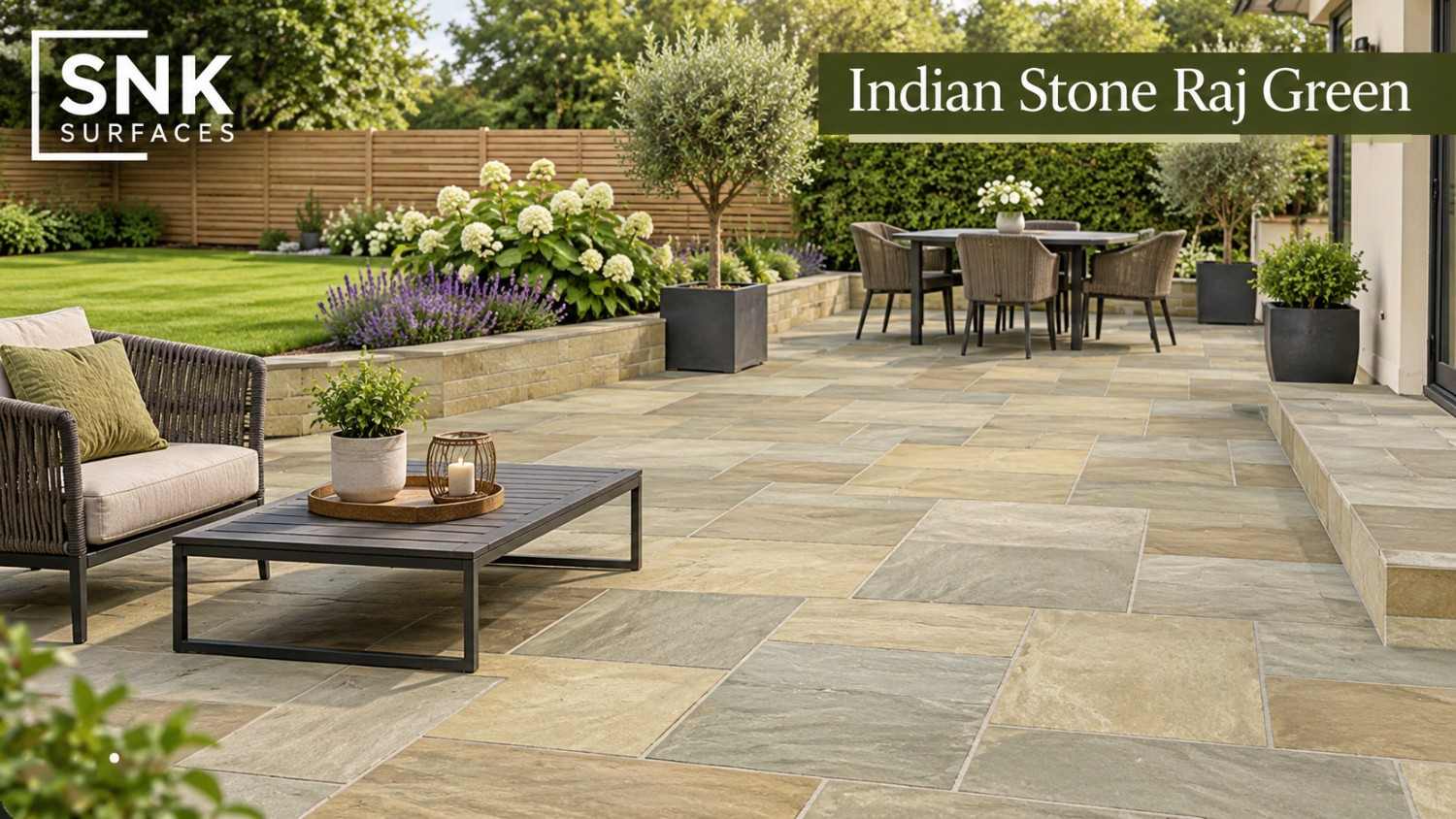
Indian stone Raj Green is a popular natural sandstone known for its beautiful blend of green, grey, brown, olive and buff shades. Despite its name, this stone does not have a single green colour. Each slab displays a different combination of earthy tones, natural markings and textures. These variations give every installation a unique appearance. Raj Green sandstone is widely used for patios, pathways, garden landscaping, terraces and outdoor flooring. For builders, contractors, architects and landscape designers, understanding these colour variations helps with material selection and project planning. SNK Surfaces offers Raj Green sandstone for projects that require natural character, attractive finishes and reliable stone supply.
[edit] Understanding the Natural Colour of Raj Green Sandstone
Raj Green sandstone is a natural sedimentary stone. Its colour comes from its mineral composition and geological formation. Unlike manufactured tiles, natural sandstone does not have a printed or artificial colour pattern.
The stone features a balanced combination of warm and cool shades. Some slabs appear greener, while others contain more brown, grey or buff tones. This natural variation creates depth across large paved areas.
The overall appearance is generally earthy, subtle and traditional. It works well with brick walls, green lawns, wooden features and modern outdoor spaces.
[edit] What Are the Typical Colour Variations in Indian Stone Raj Green?
Indian stone Raj Green features several natural colour variations. The most common shades include olive green, grey-green, earthy brown, buff and beige. Their proportions can change from one slab to another.
Here are the main colours buyers can expect.
[edit] 1. Olive Green and Muted Green Shades
Green is one of the defining colours of Raj Green sandstone. However, it is usually a soft, muted shade rather than a bright or vibrant green.
Some slabs feature olive, moss green or sage-like tones. These shades create a natural connection with garden surroundings.
Olive green slabs work particularly well in outdoor areas with grass, shrubs, trees and natural timber. They also complement traditional brickwork and stone walls.
[edit] 2. Grey and Grey-Green Shades
Grey is another important part of the Raj Green colour range. Some slabs have a soft grey appearance, while others show a mixture of grey and green.
These cooler tones help balance the warmer brown and buff shades. They also give the paving a more understated appearance.
Grey-green sandstone is suitable for both traditional and contemporary landscaping. It pairs well with neutral walls, dark garden furniture and modern architectural details.
[edit] 3. Brown and Earthy Shades
Brown tones add warmth and depth to Raj Green sandstone. Depending on the individual slab, these colours may range from light earthy brown to deeper natural brown.
Some pieces display brown patches, while others have a more even distribution of warm tones.
These shades are especially attractive in traditional gardens and outdoor spaces with red brick, timber fencing and natural landscaping.
[edit] 4. Buff and Beige Shades
Buff and beige provide lighter colour accents within Raj Green sandstone. These shades create a contrast with the darker green, grey and brown areas.
They help prevent the overall paving design from looking too dark or uniform.
Buff-coloured sections also complement cream walls, lighter stone features and warm-toned outdoor furniture.
[edit] 5. Subtle Mineral Markings and Natural Patterns
Apart from its main colours, Raj Green sandstone may display natural markings and tonal patterns.
These can include:
- Slight changes in colour across the surface.
- Natural mineral markings.
- Uneven earthy patches.
- Subtle bands and variations in texture.
- Differences between individual stone pieces.
These characteristics contribute to the natural appearance of the material. They are not automatically signs of poor quality.
[edit] Why Does the Colour of Raj Green Sandstone Vary?
Colour variation is a normal characteristic of natural sandstone. Several geological and environmental factors influence its appearance.
Mineral composition: Different minerals and natural compounds contribute to the stone's colour. Iron-bearing minerals can produce earthy shades, including brown, yellow and reddish tones. The British Geological Survey explains the classification and composition of different sandstone types.
Natural geological formation: Sandstone develops through the accumulation, compaction and cementation of sand-sized particles. Changes in mineral content and geological conditions create differences in colour and texture.
Quarry selection: Different quarry layers and stone selections may produce slightly different colour combinations. This means that one batch may appear greener, while another may contain more brown or grey tones.
Surface finish: Riven, sawn, honed and other finishes can change how light interacts with the stone. Textured surfaces may create more visible shadows and tonal depth.
For technical information about sandstone, explore the Natural Stone Institute's sandstone and quartzite guide.
[edit] Does Raj Green Sandstone Change Colour When Wet?
Yes. Raj Green sandstone can look darker and richer when exposed to moisture.
When the surface is dry, its green, grey, brown and buff shades generally appear softer. After rain or washing, the colours may become deeper and more noticeable.
For example, olive sections can appear stronger, while brown areas may look richer. Grey sections can also develop a deeper appearance.
This is a natural response to moisture and does not necessarily indicate a change in the stone itself.
Architects and contractors should assess samples in different lighting conditions and, where possible, compare both wet and dry surfaces before finalising their material selection.
[edit] How to Maintain Colour Consistency Across a Raj Green Installation
Natural colour variation gives Raj Green its appeal. However, large commercial and residential projects often require a balanced overall appearance.
Here are some practical recommendations for achieving a visually consistent installation.
Mix slabs before installation: Take pieces from different packs and distribute them across the installation area. This helps avoid noticeable clusters of similar colours.
Check samples before ordering: Review physical samples to understand the natural colour range. Product photographs may not represent every shade accurately.
Order sufficient material: Calculate the required quantity carefully and consider additional material for cutting, breakage and future repairs. This can help reduce differences between separate deliveries.
Discuss batch selection with your supplier: Ask about available stock, expected colour variation and consistency between batches before confirming a large project.
Follow suitable maintenance practices: Use cleaning products recommended for the selected stone. Avoid unsuitable acidic or abrasive cleaners that may affect the surface.
These steps help contractors and landscape designers achieve a more balanced finish without removing the natural character of the sandstone.
[edit] Where Can You Use Raj Green Indian Sandstone?
Raj Green sandstone is a versatile natural material for several outdoor applications.
- Patios: Its earthy colour combination creates an attractive surface for traditional and contemporary gardens.
- Garden pathways: Green and brown tones blend naturally with surrounding plants and landscaping.
- Terraces: Its varied appearance adds character to residential and commercial outdoor spaces.
- Courtyards: The combination of warm and cool colours creates an inviting outdoor environment.
- Wall cladding: Selected sandstone formats can introduce natural texture and colour to exterior walls.
- Steps and landscaping features: Matching stone elements can create a coordinated outdoor design.
The correct thickness, finish and installation method should be selected according to the intended application and project requirements.
[edit] How Does Raj Green Compare with Other Indian Sandstone Colours?
Choosing the right sandstone depends on the desired appearance and surrounding design.
Raj Green offers a mixed palette of olive, green, grey, brown and buff shades. Kandla Grey is generally cooler and more focused on grey tones. Rippon Buff features warmer cream, beige and golden shades. Autumn Brown offers a stronger earthy brown appearance.
For projects that need a natural balance of warm and cool colours, Raj Green is an attractive option.
It is particularly suitable for buyers who prefer natural variation rather than a highly uniform surface.
[edit] Why Choose SNK Surfaces for Raj Green Sandstone?
Selecting the right supplier is important for maintaining material quality and meeting project requirements.
SNK Surfaces is a natural stone and porcelain tile manufacturer, supplier and exporter serving domestic and international markets.
The company offers Raj Green sandstone in different sizes, thicknesses and surface finishes to support a range of architectural and landscaping applications.
Available finishes include riven, flamed, sandblasted, shotblasted, smooth and tumbled options. Project requirements can also determine the appropriate format and thickness.
For contractors, importers, builders and commercial buyers, working with an experienced stone supplier helps simplify product selection and sourcing.
You can explore the Raj Green sandstone collection at SNK Surfaces to review available specifications and discuss your project requirements.
[edit] Frequently Asked Questions
[edit] Is Indian stone Raj Green actually green?
Yes, but it is not a uniform green stone. It features a natural combination of olive, muted green, grey, brown and buff shades. The proportion of each colour varies between slabs.
[edit] What is the most common colour in Raj Green sandstone?
Raj Green generally features a mixture of muted green, olive and grey tones, supported by natural brown and buff shades. The exact appearance depends on the individual stone selection.
[edit] Does every Raj Green sandstone slab look the same?
No. Each slab has its own natural colour distribution, markings and texture. This variation is a normal characteristic of natural sandstone.
[edit] Does Raj Green sandstone become darker in rain?
Yes. Moisture can make the stone appear darker and bring out its natural colours more clearly. Its appearance usually becomes softer again as the surface dries.
[edit] Is Raj Green sandstone suitable for modern landscaping?
Yes. Its grey-green and olive tones work well with contemporary outdoor designs. It also complements traditional gardens, brickwork and natural landscaping.
[edit] How can buyers maintain a consistent Raj Green appearance?
Buyers should inspect physical samples, check batch availability and mix slabs from different packs during installation. These steps help create a balanced appearance across large areas.
[edit] Final Thoughts
Indian stone Raj Green stands out because of its natural combination of olive green, grey, brown and buff colours. Its changing patterns and earthy appearance make it suitable for a wide range of outdoor and landscaping projects.
Understanding these colour variations helps architects, builders, contractors and importers select the right stone for their requirements. It also helps set realistic expectations about natural colour differences between individual slabs.
If you are planning a landscaping, paving or architectural project,
Explore the Raj Green sandstone range from SNK Surfaces. Contact the team to discuss available sizes, finishes, specifications and supply requirements.
Featured articles
Check out some of the best features and news from Designing Buildings as well as key stories from around the web.

Post-War Homes: mid-century British architecture. Book review.

CIAT reflects on the party conferences.

CIOB announce the winners of the Art of Building photography competition.

National Scheme of Delegation introduced.

The cost of employing people remains a concern.
Code of Practice for Electrical Energy Storage Systems.

ECA calls on members to comment on draft 4th edition.
Bringing together expertise and creating cultural benefits.

CIOB celebrates positive Ofsted report.

The Building Safety Regulator announces a call for evidence.

Government approach could undermine delivery and regeneration.
World's first mass timber data centre.

The overlooked environmental aspect of data centre development.
Introduction to radon awareness

New technical information sheet published by CIOB.